Saturday morning I had the siphon hose coiled over one shoulder and the headlamp on, crouched between the drums, when Ruth called from the east road. She calls after every hard rain. Tuesday’s storm had knocked something loose in her head, I think, more than in her well. I told her to draw a glass at the kitchen tap, hold it to the window, and smell it. She said it looked fine and smelled like nothing. I said fine, that’s a start, and I’d swing by Monday with a bottle from Marta at the extension office.
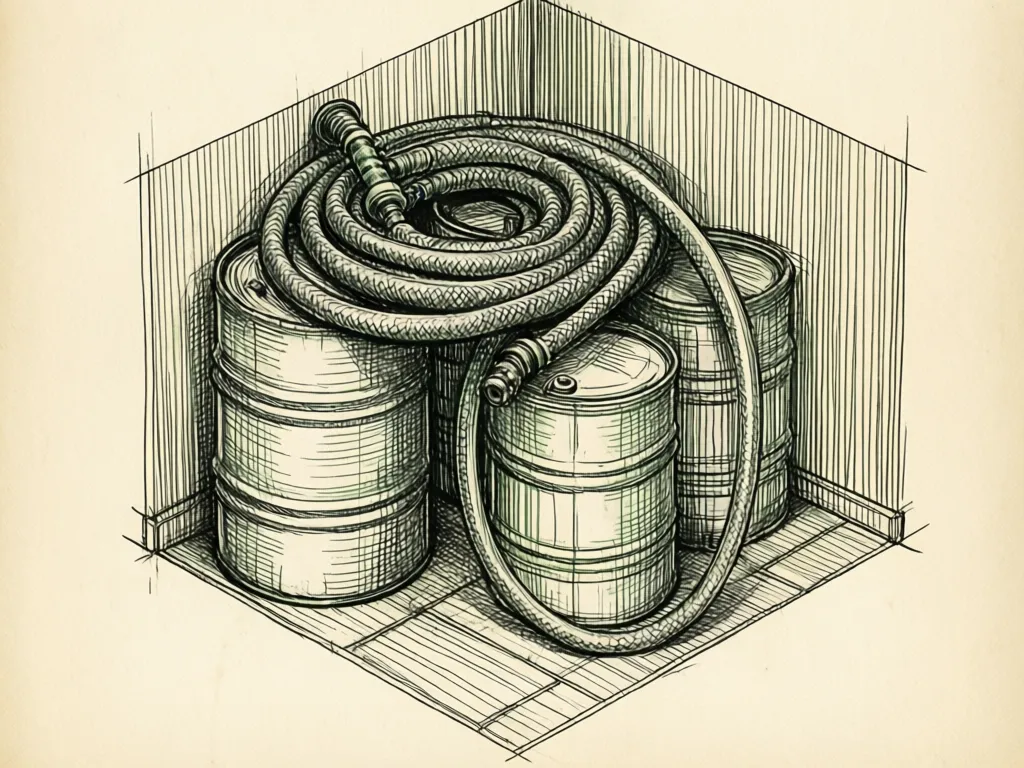
Back to the drums. First drum came up clean on the strips — chlorine holding, pH where it should be. Second drum, the one nearer the door, read low on chlorine. Not alarming. Just low. I emptied it into the garden by way of the clean siphon, rinsed it, and set it to dry upside down on sawhorses.
I thought about the walk-on kid while I waited for it to drain. Freshman year they made him special teams captain, all thirteen games. By his junior year he was leading the whole country at 24.8 yards a catch, and he put up a 91-yard touchdown in Kenan Stadium, longest play that building ever saw. Nobody handed him a roster spot. He just kept showing up on the list every week. A water log works the same way. Nobody checks your drums for you. You show up twice a year with a strip and a pencil, and the quiet weeks are the proof it’s working.
Refilled the drum from the well, treated it, logged the date on the lid in grease pencil. My wife keeps the real log in the kitchen — tests, rotations, every result in her handwriting going back years. I mark the drum for the day one of us is gone and the other has to guess.
If a friend asked me what this week was worth, I’d tell them: an hour, a bucket, a siphon, and two strips. The strips told me something the calendar couldn’t. That’s the whole of household water storage and rotation — you keep it dark, you keep it dated, and you let the water answer one plain question twice a year. Everything past that, the sizing and the treatment steps, watch the full video before you fill a single tank.
Monday I drove the bottle out to Ruth’s. She had the wooden lid off the well before I got to the porch.
“Smelled like nothing,” she said, “like you told me.”
“Nothing is my favorite smell on this road,” I said.
I took the sample, logged the time, and she wrote her name on the bottle in pencil, slow and careful, the way she signs checks. Tuesday I ran it to the lab and dropped it with the rest of the week’s bottles on the counter. The grease pencil on the second drum reads September 20.