I put chlorine down a customer’s well one October and told him I’d be back in a week to pull a sample. That was the mistake. I came back on day five, drew from the laundry tap the way I always do, and the sheet came back absent, total coliform, clean bill. I told him he was done. He ran sprinklers for two more weeks before the hard frost, and the next spring his water tested positive again and he was standing in his yard asking me what I’d actually fixed. What I’d fixed was nothing, because I’d sampled a well that was still carrying a trace of the treatment, and the lab had read a water that wasn’t the well’s water anymore. It was the water I’d made for an afternoon. That call taught me the part of shock chlorination nobody writes on the jug: the job isn’t the chlorine. The job is the retest, and the retest is where most people stop too early or start too late.
Flushing the last chlorine out
Chlorine has to leave the system before you sample, and it takes longer than your nose tells you. If you sample while any residual is still in the lines, the lab can come back absent even when the well is still carrying coliform.
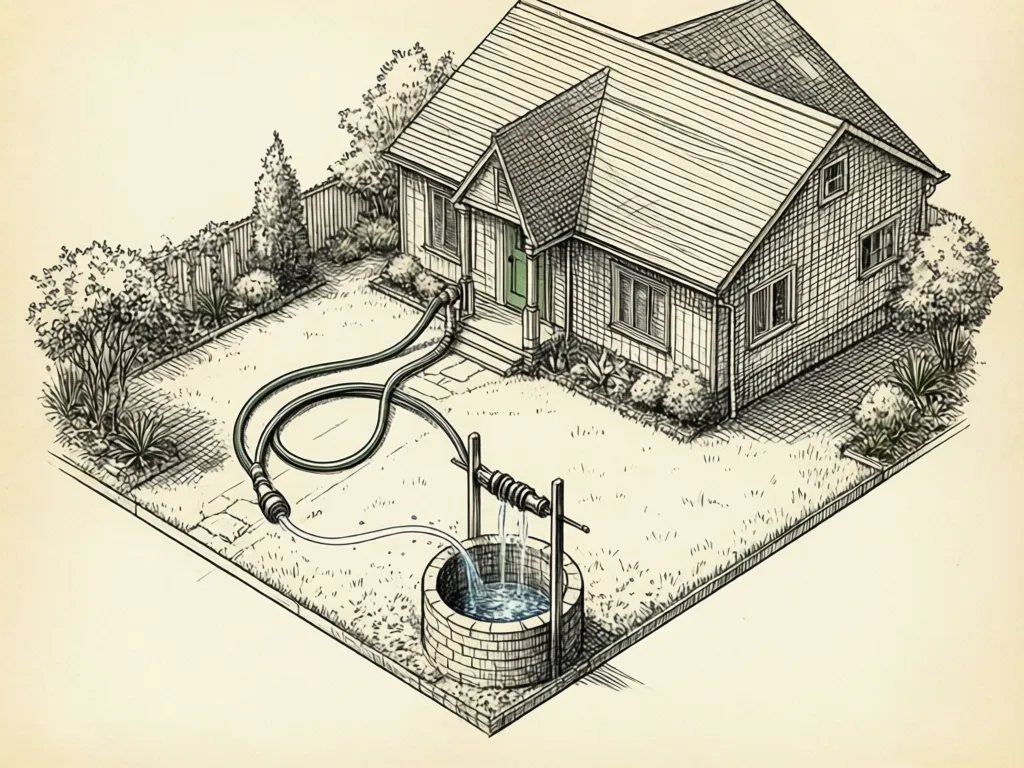
So you flush. Run the outdoor taps, the ones that bypass any softener or filter, until the strip shows zero chlorine. Then keep running. A pressure tank seems to hold a good deal of treated water and lets it go slowly. My own setup is a drilled well and a tank in the utility room, and after a treatment I run a hose across the yard for the better part of a day before I trust the strip. Then I wait. The strip says zero on a Tuesday and I still don’t sample on Tuesday, because the well itself needs time to turn over and behave like itself again. The right day varies by site, by how much water you use, by the depth of the well.
The bottle itself matters more than people expect. I’ve watched a careful man do everything right and then blow across the mouth of the bottle like he was cooling soup. That sample goes in the trash. Marta at the extension office keeps a shelf of bottles by the door for exactly this reason, and she’ll tell you the same thing she’d tell me: if you fumble the bottle, come get another one, don’t mail it and hope.
Reading the second lab report
My bottles go to the lab, an hour each way, and I plan the trip like an errand that can’t slip. If your lab is a mail-away, the details of getting a bottle there in time are worth reading before you draw anything, because ice packs and pickup times decide whether the result means anything.
When the report comes back, read it twice. Absent means absent for total coliform, and most labs report E. coli separately alongside it. That’s their language and it’s the right order.
One afternoon of my labor I didn’t charge because I’d botched the first sample timing and that was mine to eat. The treatment itself was the cheap part. The testing was the proof, and the proof is what you’re actually paying for.
Now that the timing problem is on the table, pull up the full video on household water setup and follow it step by step while you plan your own flush and sample day.
The myth: a strong chlorine smell during treatment and a clean test afterward means the well is disinfected and stays disinfected. I’ve shocked the same shallow well three times in two years before the owner let me dig out the pitless and regrade around the casing. The fourth test, the one after the dirt work, was the one that stayed clean. Chlorine is a mop. The lab report after it is a snapshot of one day, not a verdict on the year.
The counterargument from Len, my brother-in-law the plumber, is that one absent result is enough and a second test is a lab making money off nervous people. He’ll say the bacteria are either dead or they aren’t, and if the water tested clean, drink it. I half agree with him. A well with a sound cap, good grouting, proper drainage away from the head and no history of positives doesn’t need to be retested every season out of habit, and I tell people that. Where I push back is the first test after a treatment. That one isn’t habit, it’s verification, and it’s the only evidence the treatment worked. One absent result after a positive, with nothing else changed, proves the chlorine reached the sample point. If the first post-treatment test is clean and the entry point got fixed, then yes, put the bottles back on the shelf and test on your normal schedule. The argument isn’t about how often to test forever. It’s about the one test that closes the job you opened.
If a friend asked me, standing in my garage next to the drums, I’d say it about like this. Shock it, flush it till the strip reads nothing, then wait longer than feels reasonable. The chlorine is the easy part. The hole is the job.
A worked example, the call that set my rule. October, the customer I mentioned, a drilled well about twenty years old, tested positive after a week of hard rain. We shock chlorinated on the sixth of the month. I came back on the eleventh, five days out, drew the sample wrong in every way that matters: too soon, and I didn’t check the strip first. The lab sheet on the fourteenth read absent. I told him done. He ran his water all winter. The following April, after runoff, his annual test came back positive again, total coliform present, E. coli absent. Absent. His test the next spring, and the one after, both absent. The chlorine worked in October, both times. What failed was me reading a bottle of treated water as if it were the well. Twelve days and a stripped aerator was the whole difference.
Timing, bottle, same-day drive, paper that says absent. Open the video and follow it step by step before you draw your sample.