I contaminated a coliform sample last June. My own well, my own kitchen tap, a bottle from the county lab I have filled a hundred times for other people. I ran the tap, wiped it with an alcohol pad from the truck, unscrewed the cap, set the cap threads-down on the counter while I reached for the bucket, filled the bottle, capped it, wrote the date on the label. Positive for coliform. The household log is maintained by my wife, and she recorded it regardless, since that is the log’s purpose. The retest, done with the cap held in my teeth and nothing touching anything, came back absent. The well was fine. My hands were the problem. One careless moment with a sample cap costs you a retest and a week of wondering.
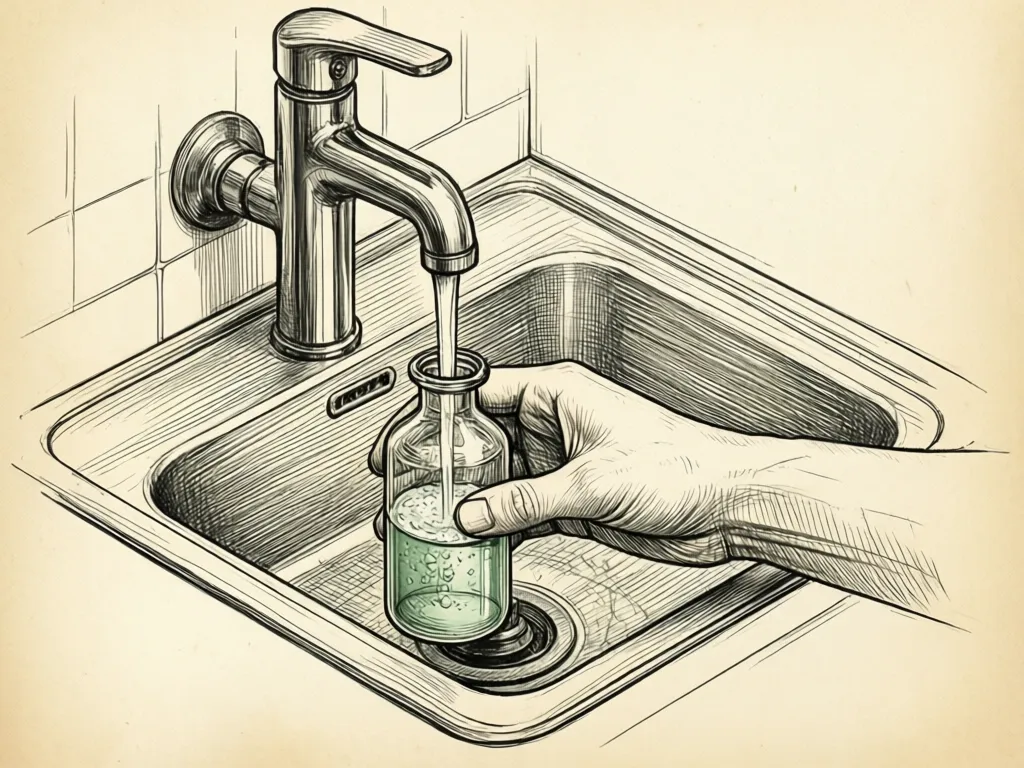
The medical people have this same fight, and their version is worth stealing from. Theirs is harder than ours. Ours is a bottle and a tap. Theirs is a vein.
The needle and the tube
Most blood collection in the US, UK, Canada and Hong Kong is done with an evacuated tube system. The basic setup is three parts: a needle, a tube holder, and the evacuated tubes themselves. The two common systems are Vacutainer and Vacuette, and Greiner Bio-One manufactured the first plastic evacuated blood collection tube in 1985 under the VACUETTE name. The vacuum inside the tube does the work. The phlebotomist seats the needle, pushes the tube into the holder, and the tube pulls the blood to its fill line. No pouring, no syringe transfer, no open container sitting on a counter while somebody reaches for something.
That last part is the whole point. A closed path from the source to the container is what keeps a sample honest. That is the needle end. The contamination end is the one you control with technique, and technique is free.
The thirty second air dry
Skin prep is where most sterile technique lives or dies. That drying time is the step everybody wants to skip. The antiseptic works as it dries, not while it sits wet. Wipe and wait. A wipe followed immediately by a needle is mostly theater.
The water version is the tap. Flame it or swab it, then let it run, then take the sample. I used to wipe and fill in the same motion. The county lab techs could tell you how often that shows up as a positive that retests absent. If you want the full sequence for a home well, the version I follow now is to obtain a sample from the well, and it assumes you will be tempted to hurry.
The bottle that multiplies bacteria
Blood culture bottles are the fussiest samples in medicine, because the whole point is to grow what is in there.
The ratio matters more than the volume. Too little blood and the ratio of blood to nutrient broth will inhibit the growth of microorganisms. Too much and you dilute the medium past its job. Automated systems monitor gases produced by microbial metabolism, a method introduced in the 1970s; before that, detection was a technician holding a bottle up to the light, and the procedures for culturing blood published as early as the mid-19th century were labour-intensive and bore little resemblance to any of this.
Water samples are simpler but the logic is identical. The lab is growing what you brought them. Bring them tap water and countertop bacteria and they will grow that, and you will pay for the privilege. Every field that takes a sample out of a body or a pipe has settled on the same two rules. Take the right amount. Touch nothing.
Two draws from two sites
The two-set rule deserves its own hard look. Two draws from two different sites means a single skin contaminant is unlikely to show up in both. One positive bottle out of four is a suspect. Two positives across separate draws is a finding. It is redundancy as a lie detector.
Here is the counterargument, and I have made it myself: for a household well test, the double-draw discipline is overkill. You are not diagnosing sepsis. You are asking whether coliform is present, and the county lab bottle comes with instructions that fit on the label. I accept that. One careful sample is enough for a routine screen, and I have told neighbors exactly that. But the first time a sample comes back positive, everything changes. Now you want a second sample from a different tap, taken on a different day, before you spend anything on treatment. The principle from the blood draw scales down fine: when the result will cost you money, confirm it with a clean independent sample. That is not a slogan. It is a savings account.
Len, on the next section, called me after his August sample came back positive. During each rainless August, the water level in her shallow well drops, and she was certain the well had become contaminated.
“You ran the tap first?” I asked.
“I filled it right off,” she said. “I rushed it to town before noon.”
“Fill a fresh one after the tap runs two minutes. Cap stays in your hand.”
“And if it comes back positive again?”
“Then we talk about the well. Not before.”
Hers came back absent too. Before you draw your next sample, go watch the full video and follow it with the bottle in your other hand.
Here is what my June mistake cost, rounded, because I kept the receipts out of spite. The alcohol pads and my time I will not count. The driller I call, my old colleague from the county utility yard, charges more than that to pick up the phone, which is why you get the sample right before you get him involved.
My current procedure, affixed to the inside of the pantry door beside the documented instructions:
Open the bottle, cap held threads-up in my fingers, never down, never in a pocket. Cap it, label it, log it, into the cooler. Straight to the lab.
That is all of it. Five minutes of patience against a week of doubt. If the bottle is sitting on your counter right now, watch the full video before you take the cap off.
The retest slip from June is still in the log, in my wife’s handwriting, next to the positive that never was.