Most bad water samples are ruined before they ever leave the house.
Kitchen Tap with the Aerator On
The standard advice says to take the water from the kitchen tap. That works only if you understand what you are sampling. The kitchen tap often sits behind a filtration device, a softener, or what seems like an aerator screen that may have been collecting mineral scale and organic film for months. If you want to know what is in your groundwater, you have to bypass that equipment or remove it. I pull the aerator off with a pair of pliers wrapped in cloth so I do not scratch the chrome. If you have an under-sink filter, I’d guess you’d want to draw the sample before that point, or the lab may just tell you that your filter works, not that your well is safe.
The tap itself needs to be clean before you touch the bottle. I run the water hard for three to five minutes to clear the pressure tank and the house plumbing. This is not about the well. This is about the pipe between the well and the glass. If you have a water softener, bypass it. You want the water as it comes from the ground, not as you prefer to drink it.
The bottle matters. Do not use a jar from the kitchen. Do not rinse a soda bottle and hope for the best. The county lab gives out sterile containers with a preservative already inside, and the cap is sealed. Hold the cap by the outside threads. Keep the bottle level. Do not splash.
If you are testing for bacteria, you need to get the sample to the lab fast. The lab is an hour from my place, and I plan the trip the same morning I collect the water. The bottle goes in a cooler with ice, not touching the ice directly, kept dark. I keep the shipping supplies ready by the back door so I am not hunting for a box when the water is running. There is a specific way to handle these containers, and it is covered in the sterile bottle handling method that I follow every time.
People have been pulling water from the ground for a long time. At around 8400 BC, a shaft was driven through limestone in the Eastern Mediterranean to reach an aquifer at 8 metres. They lined their wells with wood or wickerwork. We have better tools now, but the principle is the same: you are drawing from a hidden source, and you cannot see what is in it. You have to take a portion and trust that it speaks for the whole.
Clean Bottle Straight from the Lab
The chemistry of your well changes before it reaches the tap. If you have a pressure tank with a bladder, the water sits there. For accurate metals testing, particularly lead or copper, the lab often wants a first-draw sample. That means you let the water sit in the pipes overnight, do not run any water in the morning, and fill the bottle from the tap immediately. This captures what has been leaching out of your plumbing.
For a bacteria sample, you want the opposite. You want fresh well water, not water that has been sitting. I run the tap until the temperature stabilizes, which I take to mean the water is coming straight from the well casing. I have a gauge that screws onto the hose bib outside, and I watch it to make sure the pump is cycling normally before I draw. If the pressure is low, I wait. A sluggish pump seems to stir up sediment that throws off the results.
Len hands out these bottles and reads the reports when they come back. She keeps a log of who has tested and who has not. I pick up my bottles from her, and I do not open them until I am standing at the tap with the water running. The lid comes off, the bottle fills to the shoulder, the lid goes back on without touching anything but the outside. I label it with the date, time, and which tap I used. My wife keeps the household log in a notebook, and she writes down every test we run.
One winter I got sloppy. I was in a hurry to get to town before the weather turned, and I filled the bacteria bottle from the laundry room sink instead of the outside hose bib. I did not clean the tap first. I figured it was close enough. The lab called two days later with a positive coliform result. I drove back out to the county seat with another bottle, ran the proper procedure at the wellhead, and the test came back clean. The first result led to a return trip, another analysis, and a week of boiling water because I thought the well was contaminated when it was just my dirty faucet. That was the tuition I paid for taking shortcuts.
In the early years at this place, I tested once a year and assumed that was enough. Then Len, my neighbor on the next section, had his shallow well drop in a dry late summer, and he started getting sediment that clogged his fixtures. She tested, and the bacteria count had shifted. I realized my annual schedule was missing the seasonal changes. I shifted to twice a year, spring and fall, and I added a test after any hard runoff event. I watched the results come back over the seasons. The spring samples after snowmelt seemed to show different mineral loads than the fall samples after the summer heat. I adjusted when I treated the water, not just if I treated it.
People have worried about this longer than you might think. The Book of Changes, from the Western Zhou dynasty, describes how the ancient Chinese maintained their wells and protected their sources. They knew that a well required tending, not just digging. In the 1930s, a magazine called the Literary Digest tried to predict a presidential election by sampling millions of people, but they got it wrong because they sampled the wrong people. The list seems to have come from car registrations and telephone books during the Depression. The sample looked large, but it was not representative. A bad sample is worse than no sample because it gives you false confidence.
Now that the problem is on the table, go watch the full video on setting up household water storage and treatment. Pull it up before you fill your next bottle.
When you are ready to test, you have two ways to go. You can use test strips at home, or you can send a bottle in. I keep both. The strips sit on a shelf in there. They are useful for a quick check after I have worked on the plumbing or shocked the well. For that, I use the lab. The lab is the only way to know if the water is safe for Ruth, a neighbour’s shallow well.
It costs time and specificity. The strips are immediate but blind to the dangerous stuff. The lab is slow but definitive. If you are worried about arsenic, you need the lab, and you need to know what you are looking for when the report comes back. The arsenic risks in groundwater are specific to certain rock formations, and the lab report will show you the level if you ask for it. Once you have the report, you have to be able to read it. The numbers mean different things depending on whether you are looking at maximum contaminant levels or aesthetic guidelines. The lab report format breaks down what each column means.
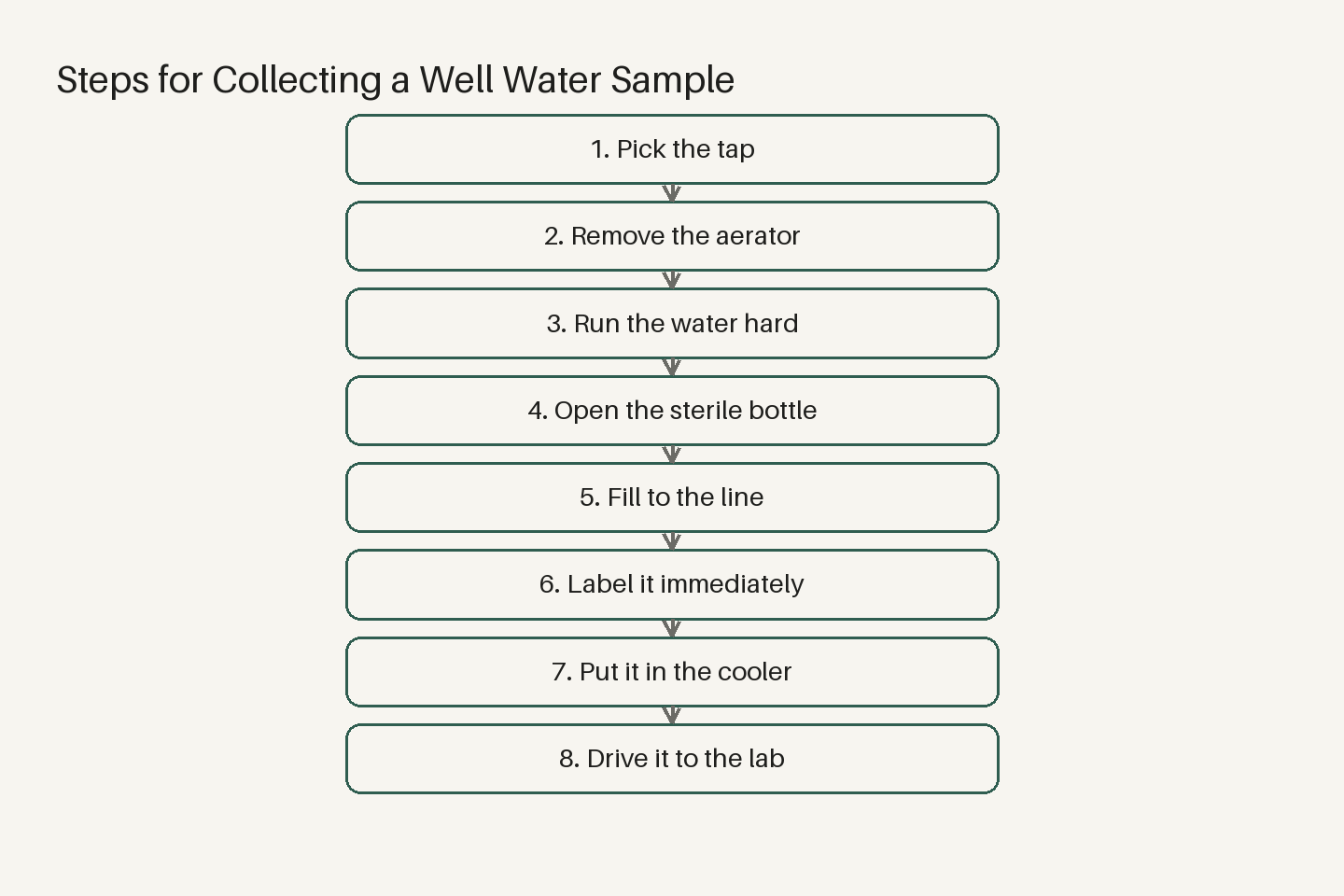
I collect a sample in this way. I pick the tap based on what I want to know, outside for well water, kitchen for household exposure. I remove the aerator or bypass the filter. I open the sterile bottle without touching the inside. I fill to the line and close it. I label it immediately. I put it in the cooler. I drive it to the lab the same day. If I am shipping it instead, I follow the packing procedure for samples to keep it cold and intact.
Do not guess what is in your water. Test it before you treat it. The expensive mistake is assuming your water is fine because it looks clear. Watch watch the full video now, then go get your bottles.
The windmill at the Hartman place still turns when the wind picks up, two hours from any help, and the stock tank still fills.