Your roof is already the best rain collector you own, and the gutters decide whether you keep that water or lose it.
Gutters that actually hold water
Most houses I get called to have gutters hung too flat. A gutter seems to need a slight fall toward the downspout, and over a long run that fall is what moves the water instead of letting it sit and grow mosquitoes. The hangers loosen over the years, the run sags in the middle, and you get a pond up there that overflows in the first real storm. The trade-off with a bigger gutter seems simple: it likely carries more water before it overflows, but I’d guess it costs more and feels heavier on the fascia when it fills with wet leaves. The trade-off with gutter screens, in my experience, is that they seem to keep leaves out while also slowing the water down enough that a hard rain sheets right over the top. I run mine without screens and clean twice a year. That is an hour on a ladder, not something you get.
First flush diverter
The first water off a roof is the dirtiest water that roof will ever give you. A first-flush diverter is a length of pipe that, in my experience, seems to fill with that first dirty water and then seals it off so the cleaner water behind it goes to your tank. It is a simple thing and it works. Mine hangs off the shop roof and I tip it after every storm, the same way I check the whole set of catchment parts before I trust a barrel for the season.
A friend of mine asked me last spring whether he needed one on the barrel he was setting up for his tomatoes. I told him: you are putting this water on food you will eat raw, and the roof is where birds sit. Put the diverter in or don’t eat the tomatoes. He put it in.
Where the downspout lands
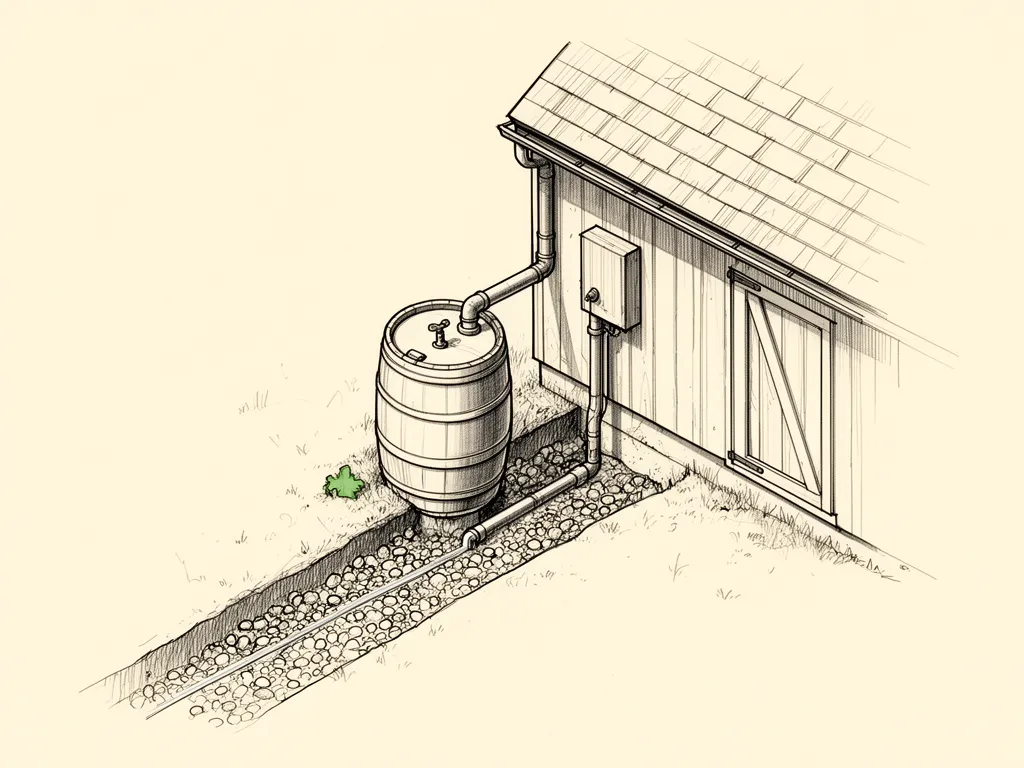
Where the water goes after the tank matters as much as where it goes in. Every barrel and tank needs an overflow path, and that path needs to end somewhere the water can soak in or run off without undermining anything. When you work out how much roof feeds one downspout, you are really working out how much water that overflow has to get rid of in a hard hour. The trade-off in tank placement is gravity versus convenience: higher is better for pressure and worse for everything else, including the day it tips.
I got a call from Ruth two years ago in October, after the first big rain of the fall. She had set a barrel under a downspout off her barn roof that spring and it worked fine through the little summer showers. The October storm filled it in an evening and the overflow ran down the barn wall and into the tack room. Her words were, “Gus, the saddle is wet and I don’t understand why, the barrel is full.” The barrel being full was the problem. We dug a shallow trench from the overflow out to a gravel patch downhill, twenty minutes with a shovel, and the next storm went where it was told.
Pull up the full video on this setup and follow it step by step while you are standing at your own downspout, because it is easier to copy the plumbing than to describe it.
Over seasons the system settles
The first season with a new barrel teaches you the rainfall pattern of your own place, which is never the pattern you assumed. I thought my shop roof would keep a barrel full through the summer. It keeps it full through June. By August the barrel is a garden ornament and the garden is on the well. That is fine, because the barrel was never the plan, it was a supplement, and the drums are the actual reserve. Over the years the gutters get re-pitched once, the diverter gets a new seal, the barrel gets scrubbed when it starts to smell, and the whole thing becomes maintenance instead of a project. The year two summers back when Ray’s shallow well dropped, his barrels were dry too, because rain barrels do not make rain. What they did was stretch her spring, and stretching a spring is worth having.
What people believe about roof water
It was clean when it fell. Then it hit your roof, which is a warm flat surface that birds have been using all month. The other myth runs the opposite way: that roof water is dangerous to touch and needs a complicated system before it can water a lettuce. Neither is true. The list I actually follow, every spring, is short: clean the gutters, check the fall with a level, flush the diverter, scrub the barrel, run the overflow route once with a hose, and put a test strip in a sample of what comes out.
Open the video and keep it playing next to you when you set your first diverter and overflow line, because the order of operations matters more than any single part.
Rain off a roof is free water with a handling cost, and the cost is an afternoon on a ladder twice a year.